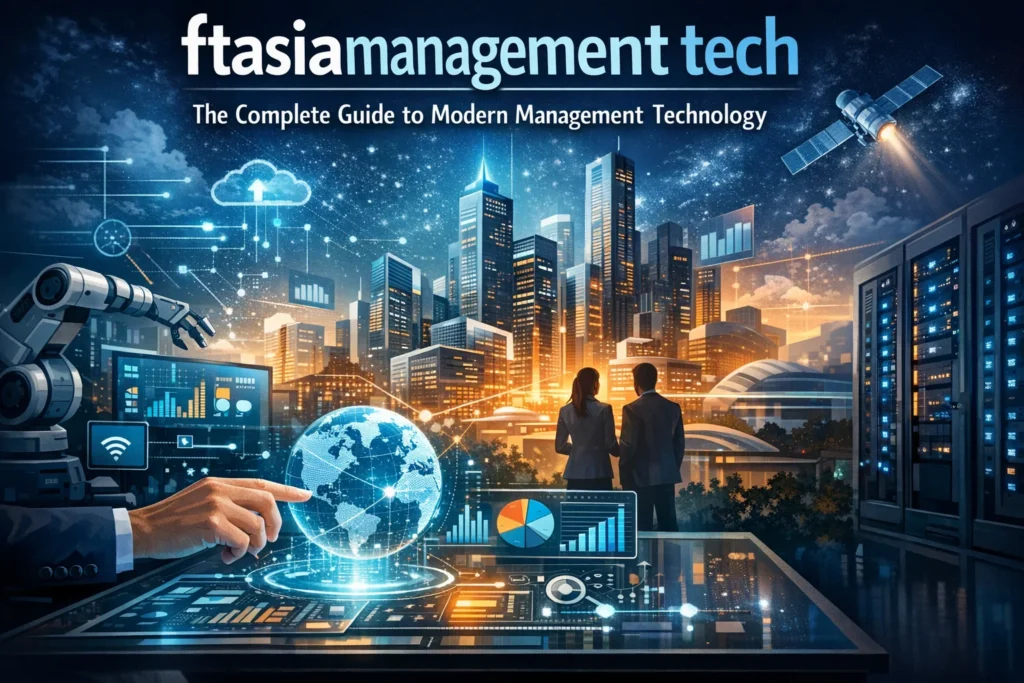
In today’s rapidly evolving digital economy, understanding how to leverage management technologies to drive performance is critical to success. One term increasingly gaining traction among business leaders, tech professionals, and organizational strategists is ftasiamanagement tech. This concept represents a broad intersection of modern management practices enriched by advanced technological tools and digital strategies that enable teams to operate smarter, faster, and with more purpose.
Whether you are leading a startup, scaling a mid‑sized enterprise, or optimizing a large organization, integrating management technologies into your everyday operations can dramatically improve productivity and outcomes. Early adopters who embraced digital management tools saw stronger collaboration, better insights into performance metrics, and more effective decision‑making. The goal of this guide is to break down everything you need to know about ftasiamanagement tech and how to make it work in real business environments.
At its core, the principles behind ftasiamanagement tech revolve around human‑centered leadership, data‑driven decisions, adaptive workflows, and meaningful integration of digital tools that support — rather than replace — human intelligence. In this first section, we explore why this concept is more than just a buzzword and how its real‑world implications can shape your organization’s strategy.
Effective leadership has always depended on clear communication, structured planning, and insight into operational performance. But traditional approaches often struggle when faced with high volumes of data, remote workforces, and fast‑changing market demands. Focusing on a technology‑enabled management framework helps leaders navigate these complexities with actionable clarity. It empowers teams to focus on results and purpose, while technologies streamline redundant processes and provide visibility across diverse functions.
The rest of this guide will unpack how ftasiamanagement tech enhances collaboration, supports innovation, and drives long‑term success by harnessing the best of human and technological strengths.
How Technology Transforms Traditional Management
Management has come a long way from handwritten schedules and physical whiteboards. Today, digital platforms such as integrated project trackers, cloud‑based systems, and AI‑enhanced analytics have made it possible to connect teams across continents in real time. What ftasiamanagement tech underscores is not just the presence of digital innovation — it’s the intentional use of these tools to improve human workflows and organizational outcomes.
For example, when teams are distributed across time zones, real‑time communication platforms become indispensable. Rather than relying solely on emails — which can get buried — collaborative tools prioritize instantaneous collaboration and shared accountability. This elevates team performance and transparency while preserving the human connection that traditional management often struggles to maintain.
“When technology enhances the everyday work experience without overwhelming it, productivity soars and clarity becomes the norm.” — Organizational strategist
Moreover, data analytics and visual dashboards turn raw metrics into visible insights for leaders to make faster, more confident decisions. Instead of guessing which projects are off track, leaders rely on real‑time data to adjust course, allocate resources, and celebrate wins. In essence, technology becomes the connective tissue that keeps strategy, execution, and performance aligned.
The next sections will dive deeper into specific technologies, methodologies, and leadership strategies that define ftasiamanagement tech in practice.
Core Pillars of ftasiamanagement tech
The strength of ftasiamanagement tech lies in its balanced integration across several key pillars that organizations need for sustainable growth:
Digital Collaboration
Cloud‑based platforms allow teams to work in sync without the barriers of geography. These systems support document sharing, real‑time edits, communication threads, and version control, all under a unified ecosystem that prevents siloed work.
Data‑Driven Insights
Tools that convert operational metrics into dashboards and alerts give leaders the visibility needed to respond wisely, not reactively. Data becomes the language of progress, rooted in evidence rather than speculation.
Workflow Automation
Routine operational tasks can be offloaded to digital systems, freeing human effort for creative or strategic work. Automation shouldn’t replace people — it should elevate performance.
How to Improve LCFTechMods: The Complete Guide to Better Performance, Stability, and Customization
Adaptive Leadership
Modern leaders who embrace flexibility and respond to evolving business contexts are best positioned for success. Adaptive leadership is a mindset powered by continuous learning, feedback loops, and technological insights.
Across these pillars, ftasiamanagement tech brings structure without rigidity, allowing teams to pivot smoothly in response to disruptions and market shifts.
Management Technology Tools That Drive Impact
At the heart of effective ftasiamanagement tech are tools that empower teams and leaders alike. Below is a table summarizing key categories of tools that organizations commonly use, alongside their primary function and real‑world business value:
| Tool Category | Primary Function | Business Value |
|---|---|---|
| Project Collaboration Platforms | Enables shared tasks, timelines, and communication | Improves team coordination and accountability |
| Cloud Storage & File Sharing | Secure document access from any device | Reduces friction and increases transparency |
| Workflow Automation Software | Automates repetitive tasks | Saves time and cuts down manual errors |
| Data Dashboards & Analytics | Visualizes key performance metrics | Empowers data‑driven decisions |
| Communication Suites | Voice, video, and messaging | Builds connectivity and cultural cohesion |
| Feedback & Performance Tools | Continuous feedback loops | Enhances employee growth and engagement |
This table captures the diversity of tools that fall under the ftasiamanagement tech umbrella. The key is not simply choosing the “best” tool — it’s finding the right combination that aligns with your workflow, team needs, and strategic goals.
Next, we will explore how organizations can successfully implement these tools without overwhelming teams or disrupting existing operations.
Implementing ftasiamanagement tech in Modern Organizations
Successfully adopting ftasiamanagement tech requires more than installing software or creating new processes. It demands a strategic approach that balances technological capabilities with human factors. Organizations that take a thoughtful, phased approach often see higher adoption rates, better engagement, and measurable improvements in productivity.
The first step in implementation is assessing existing workflows. Mapping out how tasks currently flow between teams helps identify bottlenecks, inefficiencies, and areas where technology can add real value. This step also ensures that employees are not forced to adapt to tools that do not address actual operational needs. By focusing on purpose-driven implementation, leaders create a sense of ownership and motivation among team members.
Training is the next crucial component. Even the most sophisticated platforms will fail if employees do not understand how to use them effectively. Interactive workshops, step-by-step guides, and mentoring programs help bridge the gap between technology and daily routines. When employees see the immediate benefit — such as reduced time on repetitive tasks or clearer project visibility — adoption becomes natural and sustainable.
Leadership alignment is equally critical. Executives and managers must not only endorse the technology but actively model its use. When leaders use ftasiamanagement tech consistently for reporting, collaboration, and decision-making, it reinforces the importance of the platform while creating a culture of transparency.
“Technology should serve people, not the other way around. When leaders show confidence in tools, teams follow naturally.” — Tech strategist
Enhancing Team Collaboration with ftasiamanagement tech
One of the most profound impacts of ftasiamanagement tech is improved team collaboration. In traditional setups, miscommunication and fragmented workflows can slow progress, introduce errors, and reduce morale. Modern management technologies address these challenges by providing unified spaces for sharing ideas, tracking progress, and giving real-time feedback.
Collaborative platforms allow team members to comment on shared documents, assign tasks, and update timelines, all visible to the entire team. This transparency minimizes misunderstandings and ensures accountability. When every team member has visibility into project status, it becomes easier to identify issues early and celebrate achievements collectively.
Beyond task management, ftasiamanagement tech also supports knowledge sharing. Platforms with integrated libraries, searchable archives, and tagging systems allow teams to store expertise and lessons learned. New hires or cross-functional collaborators can access historical data without relying solely on individual memory. This institutional knowledge strengthens long-term efficiency and creates a more resilient organization.
Moreover, collaboration tools often include communication features like chat, video conferencing, and discussion boards. These channels reduce the dependency on long email threads and help maintain an active dialogue among teams, even when members are distributed across different locations or time zones.
Driving Innovation Through Data Insights
Another cornerstone of ftasiamanagement tech is leveraging data for innovation. The ability to track, analyze, and interpret operational metrics empowers organizations to make informed decisions, optimize processes, and anticipate future challenges.
Dashboards, reports, and analytics tools provide leaders with a real-time view of performance across departments. Metrics such as task completion rates, project timelines, employee productivity, and client engagement give actionable insights. By understanding where resources are most effectively utilized, leaders can allocate efforts to high-impact initiatives, eliminate waste, and encourage experimentation.
Data-driven insights also support innovation by highlighting gaps and opportunities. For example, if analytics reveal a recurring delay in project approvals, leaders can redesign workflows or introduce automation to streamline the process. Similarly, feedback collected through performance tracking can inform training programs, helping employees develop skills aligned with organizational goals.
“Decisions backed by real data turn uncertainty into opportunity. It’s the difference between reacting and proactively shaping outcomes.” — Business analytics expert
Incorporating data into daily management does not mean replacing intuition with numbers; rather, it enhances judgment. Teams that understand both the qualitative and quantitative aspects of their work are better positioned to innovate while minimizing risk.
Optimizing Remote Work and Hybrid Teams
The rise of remote and hybrid work environments has created both challenges and opportunities for modern management. ftasiamanagement tech plays a critical role in ensuring that geographically dispersed teams remain connected, productive, and aligned with organizational objectives.
For remote teams, collaborative platforms and cloud-based tools ensure seamless communication. Project management dashboards track progress without requiring constant check-ins, while video meetings maintain a personal connection that emails alone cannot provide. These tools bridge physical distance and allow team members to work cohesively regardless of location.
Hybrid environments benefit from technologies that integrate in-office and remote workflows. Scheduling tools, shared calendars, and automated reminders ensure that no team member misses critical updates or deadlines. Similarly, performance tracking software allows managers to evaluate contributions objectively, promoting fairness and reducing bias that can occur in distributed teams.
By embracing ftasiamanagement tech, organizations foster an inclusive culture where all team members feel supported, informed, and empowered to contribute their best work.