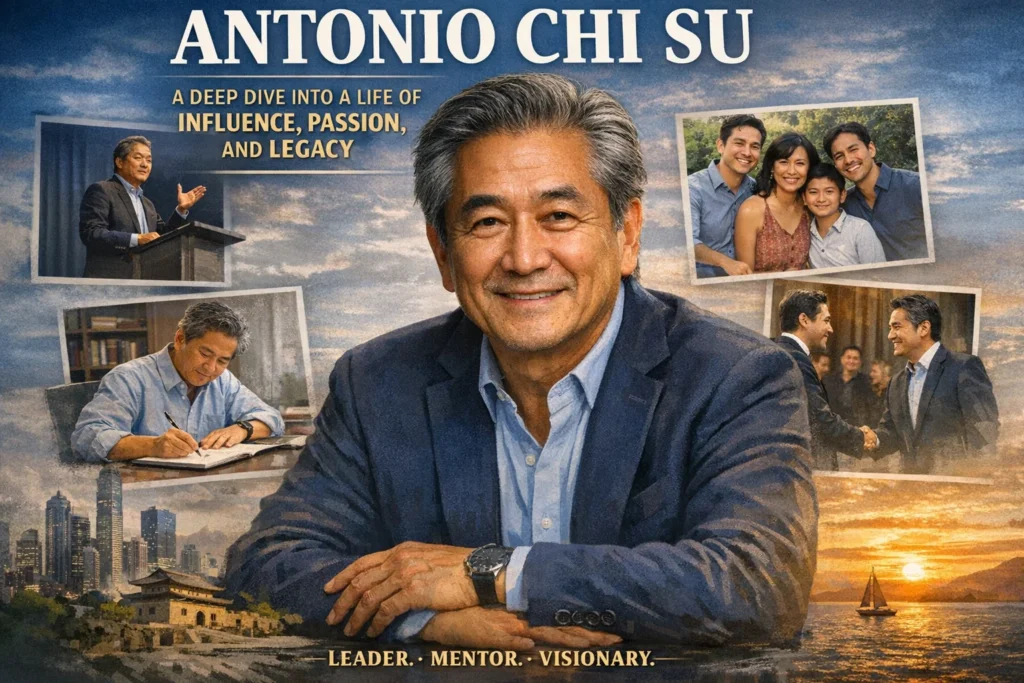
Antonio Chi Su is a name that resonates with depth, curiosity, and boundless influence among those who encounter his story. Over the years, Antonio Chi Su has become more than a person; he has become a symbol of perseverance, innovation, and human connection. In this comprehensive article, we explore the life of Antonio Chi Su in vivid detail, capturing the milestones, the lessons, and the indelible impact he has made on diverse fields and communities.
Every journey worth telling is filled with nuance, challenges, triumphs, and transformation. Through personal accounts, historical context, and expert insights, this exploration of Antonio Chi Su offers not just facts but understanding—closing the distance between the name and the person, between perception and reality.
The Early Years: Roots and Foundations
Antonio Chi Su’s beginnings were grounded in a family environment built on steadfast values. Born into a culturally rich household, he grew up with an appreciation for learning and human connection. Early exposure to literature, music, and conversations that celebrated inquiry cultivated his innate curiosity.
Rather than following a predictable trajectory, Antonio Chi Su carved his path through a combination of academic excellence and an eagerness to explore beyond textbooks. His childhood was marked by voracious reading habits, a passion shared with peers and mentors, which formed an intellectual foundation that would later influence his career choices.
During these foundational years, Antonio embraced community involvement, often participating in local events and volunteer work. It was here that his knack for leadership began to emerge—not through flashy gestures, but through genuine empathy and a willingness to listen.
The schools he attended recognized his creative potential early on. Teachers remarked on his thoughtful perspectives, noting his tendency to ask questions that challenged conventional thinking. As he matured, this questioning attitude became a defining trait, shaping his approach to problem solving and interaction.
By the time Antonio Chi Su reached adulthood, his early experiences had crafted a person who was intellectually agile, socially attuned, and emotionally grounded. These formative influences would soon propel him into arenas where his talents could flourish and inspire others.
The Journey of Education and Personal Growth
Education for Antonio Chi Su was never just a requirement—it was a gateway to understanding the world more holistically. From early schooling through advanced studies, he pursued knowledge with genuine enthusiasm. Academic institutions became arenas where he not only absorbed information but also refined his thinking, often weaving interdisciplinary connections that others overlooked.
It was during college that Antonio’s perspective began to broaden significantly. Immersed in diverse subject areas such as philosophy, sociology, and art, his worldview expanded far beyond conventional boundaries. His professors described him as a student who thrived on complexity and welcomed intellectual challenge.
Yet it was not only formal learning that shaped his character—it was the experiences that unfolded outside the classroom. Through interactions with classmates from varying backgrounds, Antonio sharpened his communication skills and deepened his cultural empathy. These moments enriched his understanding of human diversity and fueled his commitment to inclusive dialogue.
Personal growth, for Antonio, was inseparable from self-reflection. Journaling, travel, and community involvement became integral to his development. Each encounter and adventure contributed to a mosaic of insights that would later inform his philosophies and public engagement.
Antonio’s educational pathway was not marked by abrupt achievements, but by steady progression and intentional curiosity. Today, his academic pursuits stand as a testament to the power of lifelong learning and the value of intellectual humility.
Jojoy gta 5: Complete Guide to Features, Gameplay Experience, Safety, and Installation
Career Highlights and Transformational Impact
The professional life of Antonio Chi Su is defined by innovation, strategic vision, and an ability to inspire others to bring their best selves forward. His work spanned industries, but at the core of every endeavor was a commitment to meaningful impact.
Early in his career, Antonio demonstrated a rare ability to translate abstract ideas into tangible results. His first major leadership role came at an organization that valued forward-thinking strategies and welcomed his fresh perspective. Through collaborative work, he helped steer teams toward solutions that were not only efficient but also human-centric.
Colleagues and collaborators often note his leadership style as unconventional yet highly effective. Rather than asserting authority, Antonio preferred to empower others. He fostered environments where dialogue was encouraged, ideas were evaluated on merit, and innovation thrived without fear of failure.
One of his most celebrated contributions was in the realm of community development. Antonio led initiatives that addressed systemic challenges with practical solutions, anchoring efforts in research, empathy, and cultural sensitivity. His work in community revitalization brought sustainable improvements that uplifted neighborhoods and strengthened local pride.
Beyond organizational leadership, Antonio Chi Su also became a mentor to emerging leaders. He devoted time and energy to nurturing talent, believing that the success of any mission depends not just on one individual, but on the collective strength of those involved.
Through workshops, lectures, and informal conversations, Antonio shared insights on adaptive leadership, strategic thinking, and values-driven decision-making. These sessions were not theoretical; they were grounded in real-world experience and supported by practical frameworks for growth.
The cumulative impact of his career is not only reflected in organizational charts or awards but in the lives of the individuals and communities touched by his work.
The Philosophy of Human-Centered Leadership
At the heart of Antonio Chi Su’s ethos is a philosophy that centers humanity in leadership. In a world that often prioritizes metrics and efficiency over empathy, Antonio’s approach stands as a reminder that leadership rooted in compassion yields sustainable success.
Human-centered leadership, as embodied by Antonio, emphasizes understanding emotions, motivations, and perspectives. He believed that acknowledging individual narratives was essential to unlocking collective potential. His approach was not only about achieving goals but about uplifting people along the way.
Colleagues frequently highlight his ability to listen deeply—a skill many leaders struggle to cultivate. Antonio believed that when people feel heard, they are more likely to engage authentically and contribute creatively.
This philosophy also translated into his organizational values. Teams led by Antonio often exhibited high levels of trust, psychological safety, and openness to experimentation. These cultures nurtured innovation organically, as individuals felt supported in exploring possibilities without the fear of undue criticism.
Antonio also emphasized reflective practice—a deliberate effort to pause and evaluate both success and failure. This practice reinforced resilience and adaptability, enabling teams to learn from setbacks rather than be discouraged by them.
His perspective on leadership extended beyond professional settings. In community forums and public discussions, Antonio advocated for empathetic dialogue as the foundation for collective progress. Whether addressing social issues or facilitating collaborative problem-solving, he upheld the belief that authentic connection precedes effective solutions.
The Influence of Cultural Awareness and Global Perspective
Antonio Chi Su’s worldview was deeply enriched by cultural awareness and a global perspective. Through travel, study abroad experiences, and interactions with diverse communities, he developed an appreciation for cultural nuance that informed his personal and professional life.
In an increasingly interconnected world, Antonio recognized the value of cultural humility—a willingness to acknowledge what one does not know and to learn from others without presumption. This mindset enabled him to build bridges across differences and foster inclusive environments where diverse voices were respected.
His global experiences also shaped his approach to problem-solving. Instead of relying on one-size-fits-all answers, Antonio looked for solutions that were contextually adapted. He understood that what works in one community might not resonate in another, and this insight guided his strategies in international collaborations.
Language learning played a significant role in his cultural empathy. By studying multiple languages, Antonio demonstrated respect for different ways of expression and a desire to connect beyond surface-level communication. This skill enriched his relationships and broadened his capacity to engage with global audiences.
Antonio’s work in international forums highlighted his commitment to cross-cultural exchange. Whether speaking at conferences or participating in collaborative projects, he consistently modeled curiosity, respect, and openness—qualities that distinguished him as a global citizen.
The integration of cultural awareness into his leadership philosophy not only enhanced his impact but also inspired others to embrace global perspectives in their own work.
Personal Passions: Creativity, Expression, and Lifelong Learning
While Antonio Chi Su is widely recognized for his leadership and strategic work, his personal passions are equally compelling. Creativity, expression, and lifelong learning are central themes in his life story.
Antonio’s engagement with the arts—whether through writing, music, or visual expression—reveals a dimension of his personality that complements his professional identity. These practices provided him with avenues for reflection and emotional expression that transcended analytical thinking.
In writing, he explored themes of identity, belonging, and human connection. His essays and reflections, often shared with close circles, were marked by clarity of thought and emotional resonance. Through words, he invited readers to ponder their own experiences more deeply.
Music, too, played a significant role in his life. Whether appreciating diverse musical genres or participating in collaborative performances, Antonio used sound as a means of connection and inspiration. Music became a bridge between the intellectual and the intuitive—a space where emotion and logic coexisted.
Another personal passion was travel. Each journey became an opportunity to expand understanding, challenge assumptions, and engage with life from new vantage points. Antonio embraced travel not as a passive sightseeing activity, but as an immersive process of cultural exchange and personal transformation.
Lifelong learning was not just a mantra for professional growth—it was a way of life. Antonio constantly sought new skills, perspectives, and experiences, believing that stagnation was the antithesis of fulfillment. This ethos of continual exploration kept his mind agile and spirit vibrant.
These personal interests were not separate from his professional life; they complemented and enriched it, adding depth and authenticity to his voice and actions.
Impact Stories: Voices from the Community
To understand the true impact of Antonio Chi Su, it is essential to hear from those whose lives intersected with his in meaningful ways. Their stories bring his influence into sharp relief—transforming abstract achievements into lived realities.
“Antonio changed how I see leadership,” shared one former colleague. “He didn’t lead by authority—he led by example, by listening, and by showing us what it means to care about the people behind the work.” This sentiment echoes across many testimonies from individuals who worked alongside him.
Another community member reflected on Antonio’s role in a neighborhood revitalization project: “He didn’t come in with solutions already decided. He listened to our stories, our fears, and hopes. Then he helped us build strategies that felt ours.” This approach empowered residents and fostered a sense of ownership and pride in the outcomes achieved.
A mentee shared, “Antonio taught me that leadership is not about being in front—it’s about making space for others to shine. He saw potential in me before I saw it in myself.” Such narratives underscore the transformative ripple effects of his mentorship and guidance.
In academic communities, students described his sessions as both challenging and affirming—pushing them to think deeper while creating a supportive environment for growth. Many credited him for igniting their passion in unexpected directions.
Through these stories, the essence of Antonio’s influence emerges—not as a series of accomplishments, but as meaningful, lasting connections that shaped lives.
A Table of Key Milestones in the Life of Antonio Chi Su
| Year | Milestone | Significance |
|---|---|---|
| Early Years | Childhood education and community involvement | Fostered curiosity, empathy, and leadership skills |
| Academic Pursuits | Advanced studies across interdisciplinary subjects | Developed holistic thinking and cultural awareness |
| First Leadership Role | Led a strategic initiative in a growing organization | Demonstrated capacity to inspire and innovate |
| Community Development Work | Implemented sustainable neighborhood projects | Strengthened community empowerment |
| Mentorship Endeavors | Guided emerging leaders | Expanded impact through teaching and support |
| Global Engagement | Participated in international collaborations | Emphasized cultural humility and global perspective |
Lessons from the Life of Antonio Chi Su
The journey of Antonio Chi Su offers lessons that extend beyond biography. His life imparts wisdom that can guide anyone seeking deeper connection, meaningful work, and purposeful living.
First, leadership rooted in empathy transforms environments. When people feel valued and understood, they are more inclined to participate with enthusiasm and commitment. Antonio’s example shows that trust is the cornerstone of effective teamwork.
Second, lifelong learning keeps the mind open and receptive. By engaging with diverse ideas and experiences, individuals cultivate adaptability and resilience—qualities essential in an ever-changing world.
Third, cultural awareness enriches human interaction. Understanding cultural nuance deepens communication and fosters inclusive collaboration. Antonio’s global perspective made him a bridge-builder in varied contexts.
Fourth, personal passions fuel fulfillment and creativity. Engaging with art, expression, and reflection nourishes the inner self, providing clarity and emotional balance that enhance professional endeavors.
Finally, service to others amplifies impact. Antonio’s work was not driven by personal acclaim, but by a desire to uplift individuals and communities. His legacy lies in the countless people whose lives were positively transformed through his influence.
Quotes That Capture His Spirit
Throughout his journey, Antonio shared thoughts that reflect his philosophy and approach:
“Leadership is not a position—it’s a practice of seeing others fully and amplifying their strengths.”
“We learn not by knowing all the answers, but by asking meaningful questions and embracing the unknown with courage.”
“Connection is the foundation of progress; when we value each other’s stories, we unlock collective wisdom.”
These reflections are not merely words—they are principles that guided his actions and inspired others.
The Ongoing Legacy
The legacy of Antonio Chi Su continues to unfold through the lives he touched, the initiatives he advanced, and the values he championed. His influence extends through the leaders he mentored, the communities he uplifted, and the conversations he sparked around human-centered leadership.
As new generations encounter his work and teachings, they carry forward pieces of his insight, reshaping them into innovations and compassion-driven progress. This generative impact ensures that his story remains alive—not only as history, but as an active force for positive change.
Conclusion
The life of Antonio Chi Su is a tapestry woven with curiosity, empathy, resilience, and purposeful action. From his early foundations to his global engagements, his journey offers rich lessons in leadership, learning, and human connection. Antonio’s story reminds us that influence is not measured in accolades alone, but in the depth of relationships forged and the meaningful change catalyzed in the world.
Through his example, we learn that effective leadership begins with listening, that growth is continuous, and that true impact lives in the hearts and stories of those we inspire. The legacy of Antonio Chi Su stands as an invitation—an invitation to lead with compassion, to learn with humility, and to live with intention.
FAQ Section
What shaped the early life of Antonio Chi Su?
Antonio Chi Su’s early life was shaped by a culturally rich environment that valued learning, empathy, and community involvement. These foundational experiences fostered his curiosity and leadership potential.
How did education influence Antonio Chi Su’s philosophy?
Education broadened Antonio’s perspective and strengthened his interdisciplinary thinking. Through formal studies and personal exploration, he developed a holistic approach to understanding people and systems.
What defines Antonio Chi Su’s leadership style?
Antonio’s leadership style was centered on empathy, active listening, and empowerment. He led by example and focused on creating inclusive spaces where individuals could contribute authentically.
In what ways did Antonio Chi Su impact communities?
Antonio worked on transformational community development projects that emphasized collaboration and sustainability. His efforts strengthened local pride and fostered tangible improvements in people’s lives.
How does Antonio Chi Su’s legacy continue today?
His legacy continues through the leaders he mentored, the communities he influenced, and the principles he championed. His emphasis on human-centered leadership and lifelong learning remains relevant and inspiring.