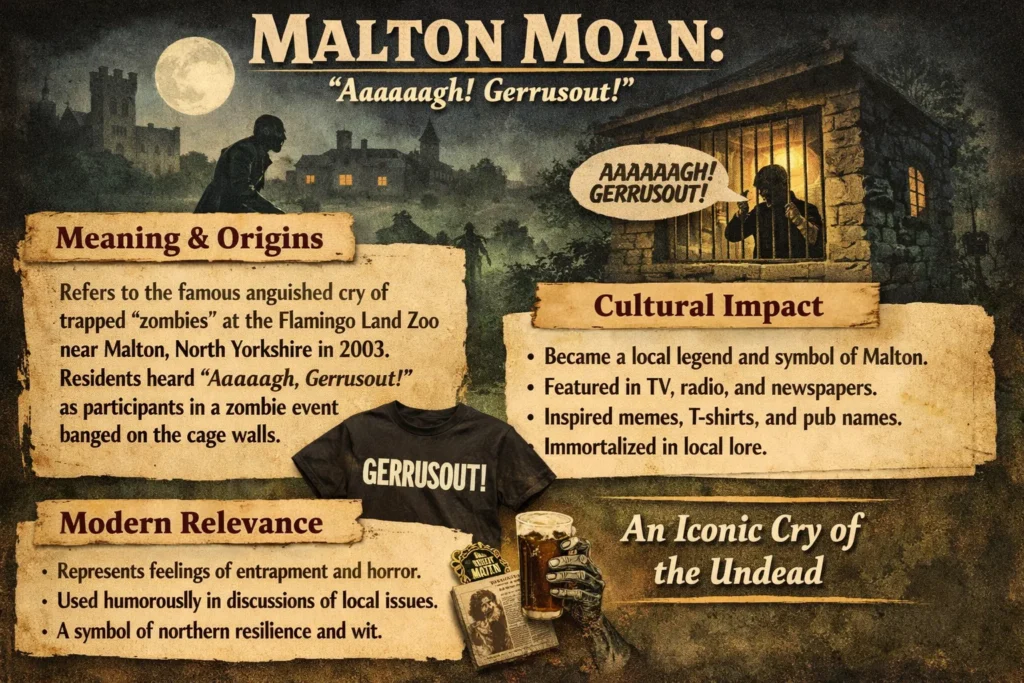
The phrase malton moan has sparked curiosity, debate, humor, and even confusion in various circles. Whether encountered through social chatter, online discussions, or local storytelling, the term carries a layered meaning that goes beyond its surface impression. It blends tone, context, and cultural nuance in a way that makes it both intriguing and misunderstood.
At first glance, malton moan might sound like a playful phrase or a passing expression. However, as it gained traction in conversations and digital platforms, it evolved into something more symbolic. It reflects the intersection of community identity, expression, and sometimes controversy. This comprehensive guide explores where it came from, how it developed, and why it continues to capture attention.
Understanding this phrase requires more than a quick definition. It demands a look at regional culture, communication styles, humor patterns, and the dynamics of online amplification. By exploring all these dimensions, the real meaning of malton moan becomes clearer and more grounded in context.
The Origins and Historical Context
Every phrase has a beginning, and tracing the roots of malton moan reveals how language evolves organically within communities. Often, such expressions originate in local environments where humor, irony, or shared experience give birth to memorable wording. In many cases, these phrases are shaped by regional dialects and informal storytelling traditions.
Historical context matters because language is never created in isolation. Social tensions, economic shifts, local events, and generational trends all influence how expressions form and spread. Malton moan appears to have emerged from this kind of social backdrop, where everyday conversations slowly transformed a simple phrase into something widely recognizable.
Local speech patterns often exaggerate emotion for comedic effect. Words like “moan” frequently symbolize complaint, frustration, or dramatic storytelling. Combined with a place-based reference, the phrase developed a layered meaning. It began as a descriptive or humorous remark and gradually expanded in usage through repetition and social sharing.
In many towns and communities, playful exaggeration is a bonding mechanism. The origins of the phrase reflect this cultural dynamic. What may have started as a lighthearted expression eventually became shorthand for a broader attitude or stereotype tied to shared experiences.
Cultural Significance and Community Identity
Language shapes identity, and malton moan became more than just a phrase; it became a marker of belonging. When people use locally rooted expressions, they signal familiarity with community culture. This creates an insider dynamic that strengthens social bonds.
Cultural significance grows when a phrase captures something widely relatable. In this case, the concept embodied by malton moan often represents a specific tone of commentary—sometimes humorous, sometimes critical, but almost always expressive. It highlights how communities narrate their own stories.
Local humor tends to rely on exaggeration, and exaggeration builds recognition. Over time, repetition transforms simple expressions into cultural symbols. The phrase began appearing in online posts, casual conversations, and sometimes even local media, reinforcing its place in shared identity.
As one community observer noted, “Every town has its own language quirks. When something sticks, it’s because people see themselves in it.” That observation perfectly captures how cultural phrases gain staying power. They resonate because they feel authentic.
Linguistic Breakdown and Semantic Meaning
To understand malton moan fully, it helps to break down its linguistic components. The word “moan” generally implies complaint, dissatisfaction, or exaggerated expression of emotion. In colloquial usage, it can be playful rather than literal.
When combined with a place-based reference, the phrase shifts from describing an action to symbolizing a pattern of behavior or tone. Linguistically, this is known as metonymy, where a term stands in for a broader concept. The phrase becomes shorthand for a style of commentary associated with a specific environment.
Semantic layering plays a crucial role here. Depending on tone, context, and audience, the phrase can be humorous, sarcastic, affectionate, or critical. That flexibility is one reason it has endured. Words that adapt to multiple meanings tend to spread more easily.
Language experts often emphasize that “meaning is negotiated through context.” This principle applies perfectly. Without context, the phrase might appear confusing. Within context, it becomes instantly recognizable and meaningful.
The Role of Social Media and Digital Amplification
Modern language spreads at lightning speed thanks to digital platforms. What once would have remained a local expression can now circulate widely through memes, comments, and viral posts. Social media played a key role in expanding awareness of malton moan beyond its original environment.
Online platforms encourage repetition, remixing, and reinterpretation. Users adapt phrases to fit new jokes, commentary styles, or trending topics. This process strengthens recognition and embeds the expression deeper into online culture.
Digital amplification also adds layers of meaning. When a phrase is shared widely, it may take on interpretations never intended at its origin. Some users adopt it humorously, while others may critique or reinterpret it for different purposes.
The spread of the phrase reflects broader trends in digital linguistics, including meme culture, regional branding, and viral storytelling. Online communities often thrive on shared language, and catchy expressions become cultural currency.
Media Representation and Public Perception
Local media outlets sometimes adopt popular expressions in headlines or commentary, especially when aiming for relatability. When media references malton moan, it reinforces the phrase’s legitimacy and visibility.
Media representation can either clarify or distort meaning. Headlines often emphasize dramatic interpretations because they attract attention. As a result, the phrase may be framed in ways that amplify certain connotations while ignoring others.
Public perception evolves as more people encounter the phrase through news coverage, blog posts, or social discussions. Over time, the collective understanding becomes shaped not just by origin but by repetition in mainstream contexts.
This process demonstrates how language moves from grassroots usage to broader recognition. It also shows how perception can diverge from original intent when filtered through multiple channels.
Choosing the Right Cooling Fan for Electrical Cabinets
Psychological and Social Dimensions
Expressions like malton moan reveal deeper social dynamics. Complaining humor, for example, often serves as a coping mechanism. It allows individuals to voice frustration in a socially acceptable way.
Psychologically, shared humor reduces tension. When people collectively acknowledge a challenge through exaggeration or irony, it creates solidarity. The phrase can function as shorthand for communal experience.
Social identity theory suggests that shared language strengthens group cohesion. Using familiar phrases signals belonging. It differentiates insiders from outsiders while reinforcing community bonds.
At the same time, any expression tied to a location may spark debate about stereotypes. Some may see it as affectionate humor, while others interpret it as unfair labeling. These differing reactions illustrate how language interacts with personal perception.
Economic and Branding Implications
Interestingly, regional phrases sometimes evolve into branding opportunities. Local businesses may incorporate recognizable language into marketing campaigns to build authenticity. Familiar wording evokes emotional connection.
Here is a simple overview of how regional expressions can influence branding strategies:
| Element | Impact on Community Branding |
|---|---|
| Local Phrase Recognition | Builds emotional connection |
| Humor and Relatability | Increases audience trust |
| Media Coverage | Expands visibility |
| Social Media Usage | Drives organic engagement |
| Cultural Authenticity | Strengthens brand loyalty |
When phrases resonate, they become tools for storytelling. Businesses leverage familiarity to create memorable campaigns. In some cases, playful expressions turn into slogans, merchandise ideas, or social media hashtags.
The broader lesson is that language carries economic value. Authentic community expressions can generate engagement when used respectfully and contextually.
Myths, Misinterpretations, and Clarifications
As with many viral phrases, misunderstandings can arise. Some people may assume literal meaning without considering tone. Others may exaggerate negative connotations.
Misinterpretation often stems from lack of context. Without understanding local humor or conversational style, outside observers might misread intent. That is why examining cultural background is essential.
The phrase malton moan has occasionally been framed as purely critical, yet many local uses are lighthearted or ironic. Context determines whether it conveys humor, frustration, or affectionate teasing.
Language thrives on nuance. Stripping away nuance reduces meaning. By exploring background and usage patterns, misconceptions become easier to address.
Responsible Usage and Community Sensitivity
Using culturally rooted expressions requires awareness. Humor that feels harmless to one group may feel different to another. Responsible communication involves understanding context and audience.
Community-centered language works best when used respectfully. A phrase tied to local identity should reflect shared experience rather than mockery. Tone matters more than wording alone.
Writers and content creators benefit from considering impact. As communication spreads quickly online, sensitivity ensures expressions remain positive rather than divisive.
Responsible usage also preserves authenticity. When a phrase becomes commercialized or misused, it risks losing its original charm. Careful engagement helps maintain balance.
Broader Themes in Regional Language Evolution
The journey of malton moan reflects a broader pattern seen across regions worldwide. Local phrases frequently emerge from humor, frustration, or shared events. Over time, they become markers of collective identity.
Regional slang often follows predictable stages: origin within a small group, gradual expansion through storytelling, amplification via media, and reinterpretation by wider audiences. Each stage shapes meaning.
Language scholars emphasize that “community speech is living history.” Expressions carry traces of social conditions, generational attitudes, and cultural priorities. The phrase embodies this idea by encapsulating tone and perspective within a compact form.
Understanding regional language evolution offers insight into how communication adapts to technological and social change. It highlights the dynamic nature of everyday speech.
The Future Outlook
As digital communication continues to evolve, local expressions will likely spread even faster. Phrases once confined to a town can gain national or global visibility in days.
The longevity of malton moan depends on adaptability. Expressions that remain flexible tend to endure. Those tied too closely to fleeting trends often fade quickly.
Continued use in both offline and online contexts will determine its staying power. Community engagement plays a key role in maintaining relevance.
Ultimately, language survives when it feels authentic. If the phrase continues to reflect genuine shared experience, it will remain part of conversational culture.
Conclusion
The story of malton moan is a fascinating example of how language develops, spreads, and transforms. What began as a localized expression grew into a recognizable cultural reference shaped by humor, identity, and digital amplification.
Its journey highlights the power of context. Meaning shifts depending on tone, audience, and medium. Understanding these layers reveals the richness behind seemingly simple phrases.
Regional expressions remind us that language is not static. It evolves through shared experience, storytelling, and social interaction. By examining origins, cultural significance, and modern impact, the phrase becomes more than words; it becomes a lens into community life.
As communication continues to change, phrases like malton moan illustrate how creativity, humor, and identity shape everyday speech in powerful ways.
Frequently Asked Questions
What does malton moan mean in simple terms?
Malton moan generally refers to a tone of exaggerated complaint or expressive commentary associated with a specific community context. Its meaning often depends on humor and local usage rather than literal interpretation.
Where did malton moan originate?
The phrase appears to have emerged from local conversational culture, where playful exaggeration and storytelling shaped its early meaning. Over time, digital sharing expanded its reach beyond its original setting.
Is malton moan considered negative?
Interpretation varies by context. In many cases, it is used humorously or affectionately rather than critically. Tone and audience determine whether it feels lighthearted or serious.
Why did malton moan become popular online?
Social media encourages catchy, relatable phrases to spread quickly. The adaptable nature of the phrase made it easy to share, remix, and incorporate into online discussions.
How should malton moan be used responsibly?
Responsible use involves understanding context and respecting community identity. When used thoughtfully and with awareness of tone, the phrase can remain engaging and culturally meaningful.